
Indian benchmark indices, Sensex and Nifty, closed lower, primarily due to a sharp sell-off in IT stocks, a fresh surge in crude oil prices, and sustained outflows from foreign institutional investors. The Sensex dropped over 300 points, while the Nifty declined by 77.95 points.

Here's how exchange traded funds work, and their advantages, disadvantages for the uninitiated.

Indian benchmark indices Sensex and Nifty closed lower for the second consecutive day, driven by investor caution over conflicting geopolitical signals from West Asia and fresh foreign institutional investor (FII) outflows.
Indian benchmark indices Sensex and Nifty traded lower amid volatile trends, influenced by escalating geopolitical uncertainties in West Asia and fresh outflows from Foreign Institutional Investors (FIIs).

Rajesh Exports has refuted allegations of financial irregularities, stating that its reported revenues are accurate and attributing the Securities and Exchange Board of India's (Sebi) interim action to a 'communication gap' between the regulator and the company.

'Allocating 5 to 10 per cent of one's portfolio and staying disciplined through market cycles helps in having a positive investment experience.'

Passive funds have resumed gaining ground in the mutual fund (MF) industry after a slowdown in 2024, with their share of assets under management (AUM) reaching an all-time high in 2025. The surge has been driven largely by robust inflows into gold and silver exchange-traded funds (ETFs).

Bitcoin has fallen from its peak of $1,26,251.3 on October 6, 2025, to $65,405.5, a decline of 48.2 per cent. Investors must recognise that sharp volatility is inherent to Bitcoin and avoid kneejerk reactions.

A source familiar with US Treasury Secretary Scott Bessent's thinking revealed on Saturday that the department "intends to utilise all available authorities to make Iranian assets accessible for rebuilding and repair efforts related to any future damage inflicted by Iran."

Indian benchmark indices, Sensex and Nifty, ended lower in choppy trade, with the Sensex declining 114 points, as investors reacted to unabated foreign fund outflows and rising geopolitical uncertainties.
The Securities and Exchange Board of India is likely to set up an exchange-traded corporate bond market in a couple of months. It will help industry to raise funds at competitive rates in a transparent manner.
The Securities and Exchange Board of India is in final stages of putting in place the system, which is expected to become operational in a couple of months. At present, there are three exchanges -- the BSE, NSE, and MCX -- which have trading in currency futures.
Indian benchmark indices Sensex and Nifty experienced a significant slump in early trade, driven by a sharp surge in crude oil prices above USD 120 per barrel, weak global market trends, and continued foreign fund outflows.

Indian equity benchmark indices experienced a significant drop in early trade, with the BSE Sensex falling over 525 points and the NSE Nifty down more than 164 points, primarily due to rising crude oil prices and ongoing uncertainty surrounding the US-Iran conflict.

Analysts say long-term investors may still benefit, but recommend limiting bullion exposure to around 10 per cent.

Indian stock markets rallied in early trade after US President Donald Trump announced a halt to planned military strikes on Iran, citing requests from Gulf leaders and ongoing "very big discussions" that could lead to a deal. This de-escalation, coupled with foreign fund inflows and gains in IT and Adani group stocks, contributed to the positive market sentiment. Track Sensex and Nifty on May 19, 2026.
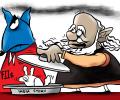
The Securities and Exchange Board of India's (Sebi's) board on Wednesday allowed foreign portfolio investors (FPIs) to trade in exchange-traded commodity derivatives. The move, it said, "will enhance liquidity and market depth, as well as promote efficient price discovery." Overseas investors will only be allowed to deal in non-agricultural commodity derivatives and only cash-settled contracts.

The recent evolution in the passive space has given rise to a new category of funds promising to deliver "active" returns through a structured passive approach. These are often referred to as smart beta or factor-based index funds, and they represent a compelling middle ground for investors.
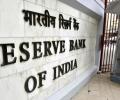
The Reserve Bank of India (RBI) has removed the prior approval requirement for non-bank entities to form tie-up arrangements for facilitating outward remittance services through banks in India, aiming to streamline the process and enhance efficiency.

Indian benchmark indices Sensex and Nifty closed marginally lower due to profit-taking, following the Reserve Bank of India's decision to keep the repo rate unchanged while lowering its growth expectations for the current fiscal year and forecasting higher inflation.
Indian equity markets, including the Sensex and Nifty, experienced a significant downturn for the second consecutive day, driven by escalating geopolitical tensions in West Asia and persistent foreign fund outflows.

The Enforcement Directorate conducted searches at premises linked to Punjab industries minister Sanjeev Arora as part of a FEMA probe into alleged foreign exchange violations, insider trading, and round-tripping of funds.

Prime Minister Narendra Modi will visit the UAE, the Netherlands, Sweden, Norway and Italy to deepen India's bilateral ties amid geopolitical changes.

With duties at 15%, GST at 3%, and making charges running as high as 20% -- the gap between a smart purchase and a careless one can easily be Rs 30,000 to Rs 50,000 on every Rs 1 lakh invested. And most of that gap is entirely avoidable. Ramalingam Kalirajan explains the math.

India emerged reasonably well from 2025. But now, the oil shock and war-related supply disruptions have again driven funds out of India and significantly weakened the rupee, points out Ajay Chhibber.

The Uttar Pradesh Special Task Force (STF) has dismantled two significant fraud operations involving crores of rupees in fraudulent share market, cryptocurrency, and forex schemes, leading to multiple arrests and uncovering a vast network of deceit.

Gold and silver prices experienced a significant drop in the national capital due to a global selloff driven by inflation concerns, central bank policies, and geopolitical tensions.

The Indian rupee appreciated by 23 paise to settle at 92.91 against the US dollar, driven by a weakening American currency, retreating crude oil prices, and renewed foreign institutional investor (FII) inflows amid increasing hopes of easing geopolitical tensions.

Mirroring the traditional hawala system, where money is sent through non-banking channels, this digital version uses the anonymity of unregulated cryptocurrency to erase the financial trail and inject cash into the domestic economy.

We will explore some of the reasons why a stock-only portfolio may no longer be sufficient and some of the modern alternatives and strategies that can help investors build resilient and profitable portfolios.

'First-time or conservative investors should avoid narrow sectoral funds.'

A record amount of pension money may be finding its way into the stock market, if buying figures in the National Stock Exchange (NSE) data are any indication. Category inflows touched Rs 37,409 crore for the three months ending September 2025, shows an analysis of NSE data.

Mutual fund industry extended its bull run in 2025, adding a staggering Rs 14 lakh crore to its asset base and pushing total AUM to a record Rs 81 lakh crore by November, powered by surge in retail participation and record SIP inflows. Venkat Chalasani, chief executive officer of AMFI, told PTI that the industry's outlook remains positive, with steady SIP inflows continuing to offset foreign portfolio investor outflows and strengthening market resilience.

Indian markets on Dalal Street rallied sharply as easing tensions in the US-Iran conflict and stable oil prices boosted sentiment. Track Nifty50 and BSE Sensex performance and key global triggers.

The Indian commodity market has experienced significant growth over the past decade, allowing Indian traders to capitalise on price fluctuations in commodities such as gold, crude oil, and natural gas. Earlier, commodity trading required substantial capital as these contracts were only available in bulk quantities. But to make the commodity market more accessible, exchanges such as the Multi-Commodity Exchange (MCX) have launched smaller and more flexible commodities contracts, including mini and micro contracts. These changes in the commodity lot size have changed the way small traders trade in commodity markets.

The highlight in January, with no surprise, has been flows into gold and silver ETFs.
Passive funds appeal to investors seeking to avoid the risk of underperformance by the fund manager and minimise the need for frequent chopping and changing of funds.

Indian markets on Dalal Street rallied sharply as easing tensions in the US-Iran conflict and stable oil prices boosted sentiment. Track Nifty 50 and BSE Sensex performance and key global triggers.
Indian equity benchmark indices, Sensex and Nifty, tumbled nearly 2 per cent for the fourth consecutive session, driven by elevated crude oil prices, escalating US-Iran tensions, unabated foreign fund outflows, and a depreciating rupee.
Indian equity benchmark indices, Sensex and Nifty, tumbled nearly 2 per cent for the fourth consecutive session, driven by elevated crude oil prices, escalating US-Iran tensions, unabated foreign fund outflows, and a depreciating rupee.
